How Do I Generate a Pathfinder 2e Character?
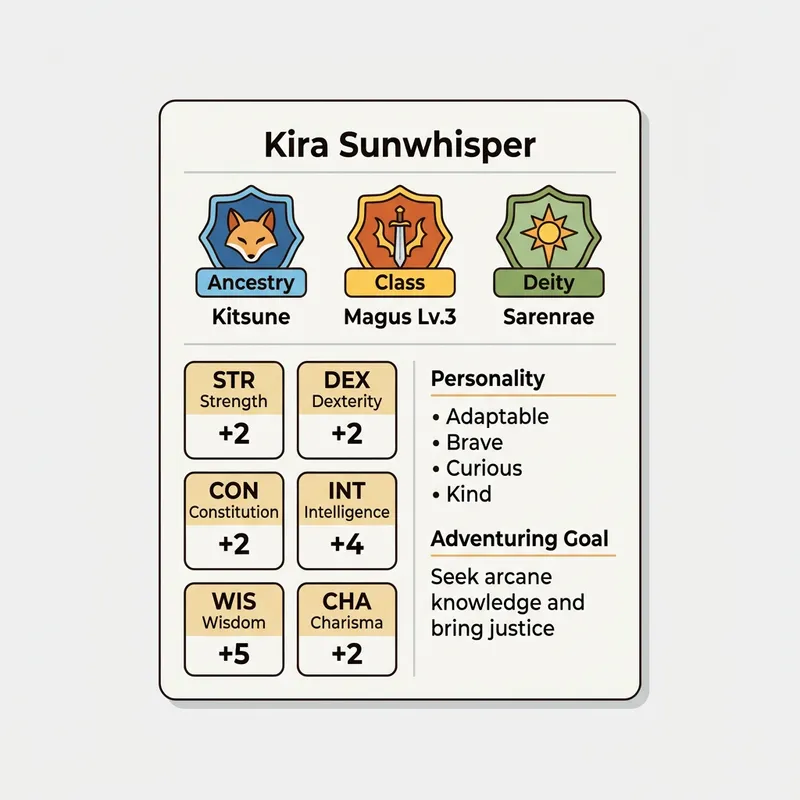
You generate a Pathfinder 2e character by clicking the generate button, which instantly produces a complete character with ancestry, class, background, deity, ability scores, personality, and goal.
Ancestry Selection
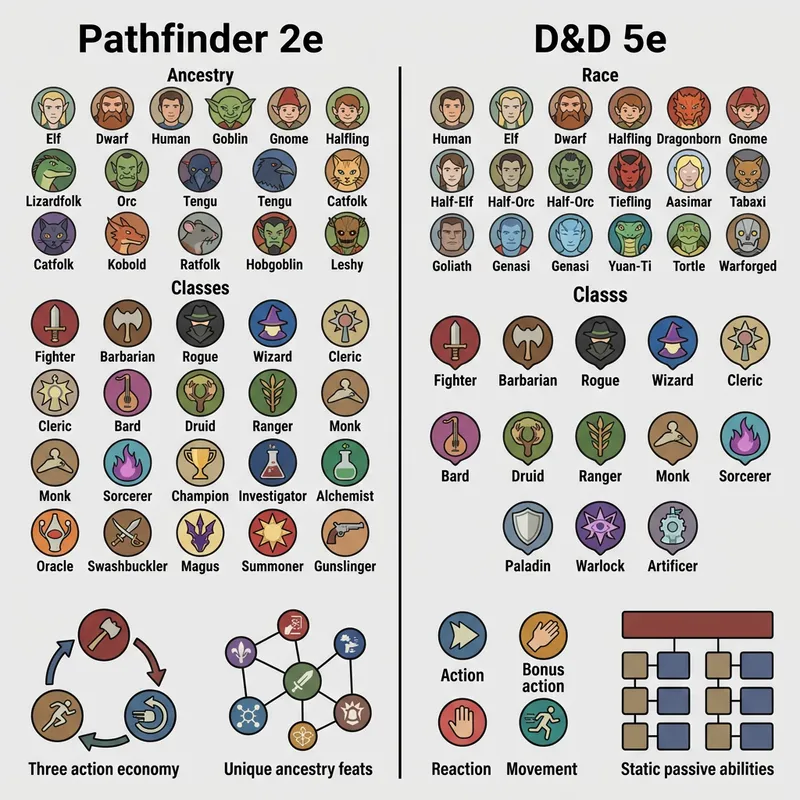
The generator includes 14 ancestries that showcase Pathfinder's diversity beyond the standard fantasy races. Alongside familiar options like Human, Elf, and Dwarf, you'll find Pathfinder-unique ancestries like Kitsune (shapeshifting fox folk), Leshy (plant creatures), Catfolk, Ratfolk, Tengu, and Goblin. Each ancestry brings distinct cultural flavor when you generate a Pathfinder 2e character.
Class Options
All 18 classes are available, including Pathfinder-exclusive options like Champion (holy warrior with reaction-based defense), Magus (martial-magic hybrid), Gunslinger (firearms specialist), Inventor (gadget builder), and Swashbuckler (finesse-based fighter with panache). These classes don't exist in D&D 5e, making them a key draw for system switchers.
What Makes Pathfinder 2e Different from DnD 5e?
Pathfinder 2e differs from DnD 5e through its three-action economy, deeper character customization with ancestry feats, and a proficiency system that uses trained/expert/master/legendary tiers instead of flat bonuses.
Three-Action Economy
Every PF2e turn gives you 3 actions to spend however you want — move, strike, cast, raise shield, or any combination. This replaces 5e's action/bonus action/movement split and creates far more tactical flexibility. The generator's class descriptions hint at each class's action economy strengths, helping you understand what makes Pathfinder 2e different from DnD 5e.
Ancestry Feats and Heritage
Unlike 5e's static racial traits, PF2e ancestries offer customizable ancestry feats at levels 1, 5, 9, 13, and 17. A Kitsune can choose between fox form shifting or magical illusions. An Elf can specialize in ancient knowledge or wilderness survival. This modular system means two characters of the same ancestry can play very differently.
How Do Deity and Alignment Work in Pathfinder?
Deity and alignment in Pathfinder work together — each deity has an alignment requirement, and certain classes like Champion and Cleric must follow their deity's edicts and anathema.
Deity Selection
The generator includes 11 deities from the Pathfinder pantheon, including Sarenrae (goddess of healing and redemption), Desna (goddess of dreams and travel), Cayden Cailean (god of freedom and ale), and Pharasma (goddess of death and prophecy). Each deity has a unique personality and set of values that shape how your character interacts with the world when checking how deity and alignment work in Pathfinder.
Alignment Impact
Champions must match their deity's alignment to access their cause abilities. Clerics channel their deity's power and must follow their edicts. The generator pairs deity and alignment logically so your character concept makes sense within the rules framework.
Can I Use This for Pathfinder One-Shots?
You can use this generator for Pathfinder one-shots by generating complete characters in seconds instead of spending the 30-60 minutes that PF2e character creation typically requires.
Quick Character Creation
One-shots are the most common entry point for new Pathfinder players. The generator handles the complexity of ancestry-class-deity-background combinations so you can focus on playing rather than building. Each character comes with a personality trait and adventuring goal that give you an immediate roleplay hook when you want to use this for Pathfinder one-shots.
System Exploration
If you're coming from D&D 5e, generating several random PF2e characters is the fastest way to explore the system's unique options. Try a Kitsune Magus, a Leshy Inventor, or a Goblin Swashbuckler — combinations that simply don't exist in 5e. Copy the character sheet and bring it to your next Pathfinder Society session.
Step-by-Step Instructions
- 1Open the Pathfinder Character Generator in your browser.
- 2Click the generate button to create a random Pathfinder 2e character.
- 3Review the ancestry, class, and background combination.
- 4Check the deity alignment and ability scores.
- 5Read the personality trait and adventuring goal for roleplay hooks.
- 6Click copy to save the full character sheet to your clipboard.
- 7Paste into session notes or your virtual tabletop platform.