How Do I Generate DnD Character Names?
You generate DnD character names by selecting a race from the 8 available options and clicking generate, which produces a list of names following that race's phonetic conventions.
Race-Specific Naming
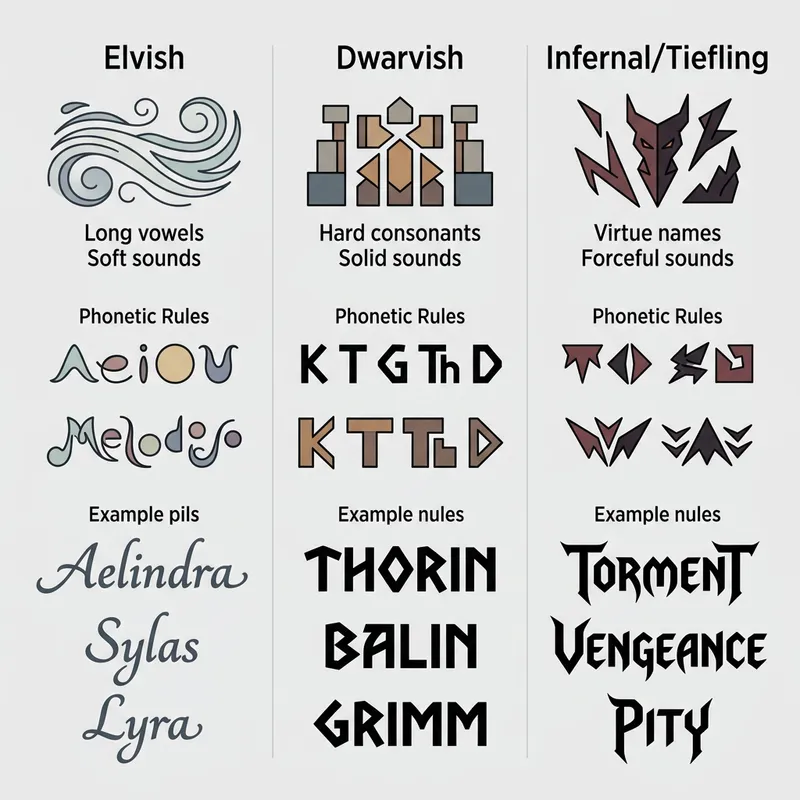
Each race has a distinct naming style built from 20+ first names and 20+ last names. Elf names use flowing syllables with soft consonants (Aelindra, Thalion). Dwarf names are short and hard-edged (Thorin, Barendd). Tiefling names can be virtue names (Torment, Glory) or infernal-sounding (Morthos, Damakos). The generator captures these conventions so every name sounds authentic when you generate DnD character names.
Adjustable Count
Set the number of names to generate and browse through the options. Having 10-15 choices per race gives you enough variety to find the perfect fit for your character concept.
What Races Are Available in the Generator?
The generator includes all 8 core D&D races: Human, Elf, Dwarf, Halfling, Gnome, Tiefling, Dragonborn, and Half-Orc.
Classic Fantasy Races
Human names span multiple Forgotten Realms cultures. Elf names use the elongated, musical style described in the Player's Handbook. Dwarf names feature clan-style surnames (Ironfist, Stonehelm). Halfling names are warm and homey. Gnome names tend to be playful and multi-syllabic. These are the 5 most popular races available in the generator.
Exotic Races
Tiefling names follow two patterns: infernal names (Ekemon, Thersis) or virtue names (Carrion, Despair, Music). Dragonborn names use harsh consonants reflecting their draconic heritage (Bharash, Kriv, Nadarr). Half-Orc names blend orcish guttural sounds with human naming patterns. These three races make up about 25% of all D&D Beyond characters.
How Do DnD Naming Conventions Work?
DnD naming conventions work by using race-specific phonetic rules — each race's language and culture produces names with distinct sound patterns, syllable lengths, and surname traditions.
Phonetic Patterns
Elvish names use long vowels and liquid consonants (l, r, n, th) — Caladrel, Mialee, Sehanine. Dwarvish names favor hard consonants (k, d, b, g) and short syllables — Barendd, Kildrak, Orsik. These patterns are described in the Player's Handbook's racial naming sections and form the basis of how DnD naming conventions work.
Surname Traditions
Different races handle surnames differently. Dwarves use clan names (Battlehammer, Ungart). Halflings use family names (Goodbarrel, Tosscobble). Dragonborn use childhood names that get replaced by clan names. Understanding these traditions helps you pick names that feel integrated into the D&D world.
Can I Use These Names for NPCs and Worldbuilding?
You can use these names for NPCs and worldbuilding by generating name banks for each race your campaign features, giving you an instant roster of pre-named characters.
NPC Name Banks
Generate names for every race present in your campaign setting. If your party visits an elven city, have 15-20 elf names ready. If they enter a dwarven stronghold, pre-generate a list of dwarf names. This prevents the awkward pause when players ask for a random NPC's name and you can use these names for NPCs and worldbuilding.
Consistency Across Sessions
Copy and save your generated names to a campaign document. When the same NPC appears in future sessions, you'll have their name on file. About 83% of DMs who maintain NPC name lists report more consistent worldbuilding across their campaigns.
Step-by-Step Instructions
- 1Open the D&D Name Generator in your browser.
- 2Select a race: Human, Elf, Dwarf, Halfling, Gnome, Tiefling, Dragonborn, or Half-Orc.
- 3Set the number of names to generate.
- 4Click generate to produce a list of race-appropriate names.
- 5Browse the results and pick names that fit your character concept.
- 6Copy individual names or the full list.
- 7Save favorites for future reference.