How Do I Generate Loot in DnD 5e?
You generate loot in DnD 5e by selecting a rarity tier — Common, Uncommon, Rare, or Legendary — and clicking the generate button, which produces 2-4 magic items plus an appropriate gold amount.
Rarity Tier Selection
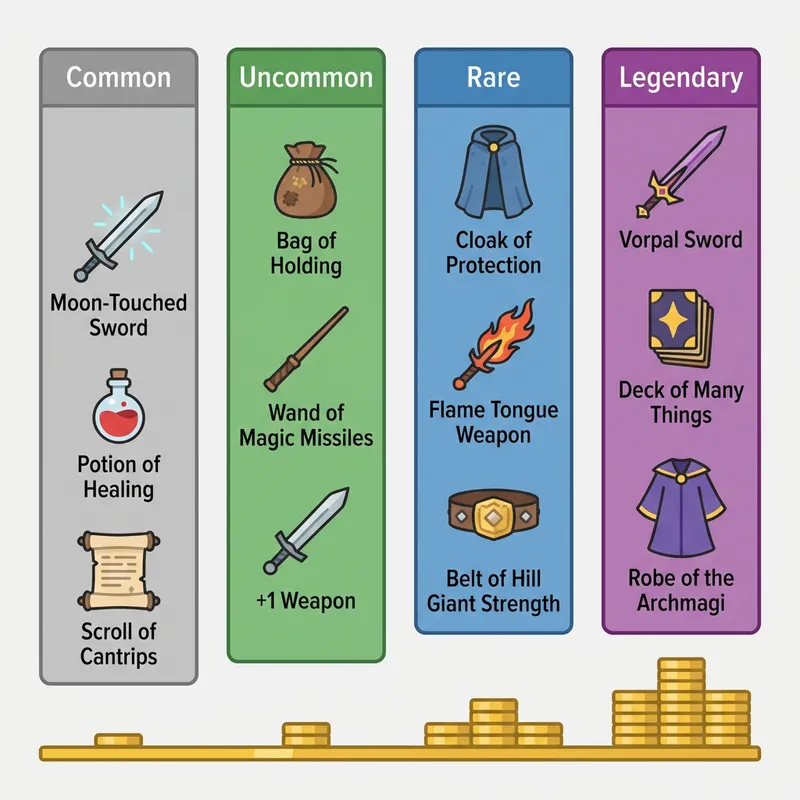
Each tier controls the power level and value of the items generated. Common items are minor trinkets and basic consumables. Uncommon items include workhorse magic gear like Bags of Holding and Moon-Touched Swords. Rare items feature powerful equipment like Flame Tongues and Cloaks of Displacement. Legendary items produce campaign-defining treasures when you generate loot in DnD 5e.
Item Categories
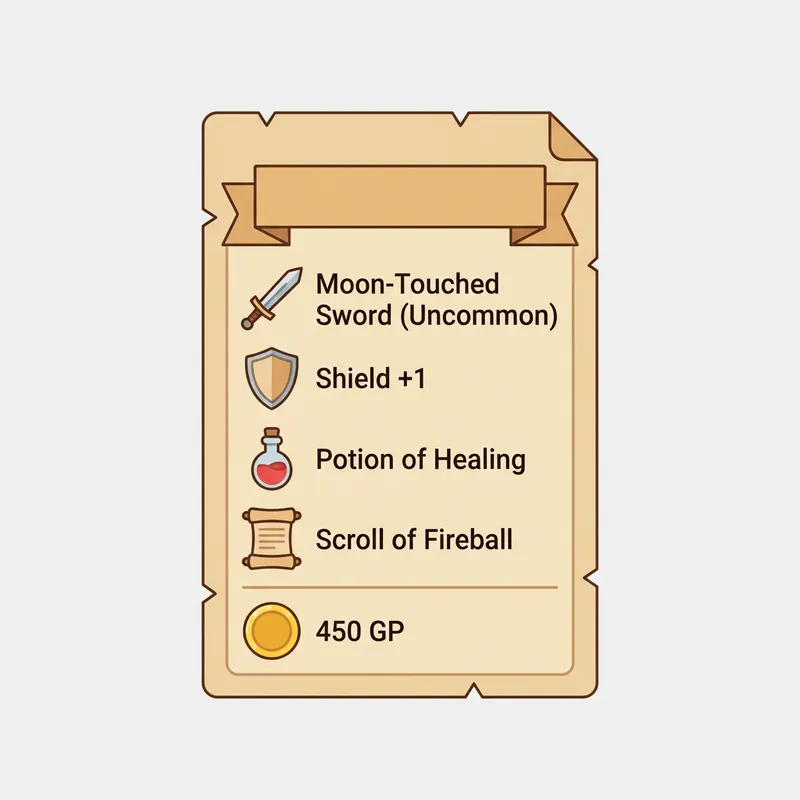
Each loot roll draws from 5 categories: weapons (swords, bows, staffs), armor (shields, plate, robes), potions (healing, invisibility, speed), scrolls (spell scrolls of various levels), and wondrous items (Bags of Holding, Decks of Many Things, Cloaks of Elvenkind). Items display with emoji icons for quick visual identification.
What Loot Should I Give My Party at Each Level?
The loot you give your party should match their current tier of play — Common and Uncommon items for levels 1-4, Rare items for levels 5-10, and Legendary items sparingly at levels 11 and above.
Tier 1 (Levels 1-4)
Stick to Common and Uncommon items. A +1 weapon or a Bag of Holding feels like a major upgrade at this stage. Gold amounts should range from 50-500 per hoard. Giving out Rare items too early trivializes encounters and removes the sense of progression when deciding what loot to give your party at each level.
Tier 2-4 (Levels 5-20)
Rare items become appropriate at level 5+. Very Rare items at level 11+. Legendary items should be reserved for level 15+ or as campaign climax rewards. The DMG recommends spacing major magic items about 4-5 levels apart so each one feels impactful rather than routine.
How Do Magic Item Rarity Tiers Work?
Magic item rarity tiers in 5e indicate the item's power level and how frequently it should appear in your campaign — from Common items found in any magic shop to Legendary items that define entire story arcs.
Common and Uncommon
Common items (cantrip-level effects, minor conveniences) have no attunement requirement and are widely available in magic-rich settings. Uncommon items (Boots of Elvenkind, Cloak of Protection, +1 weapons) are the bread-and-butter of adventurer gear. These are what your party finds in most treasure hoards when learning how magic item rarity tiers work.
Rare and Legendary
Rare items (Flame Tongue, Ring of Protection, Cloak of Displacement) significantly impact combat performance. Legendary items (Vorpal Sword, Holy Avenger, Deck of Many Things) are campaign-defining artifacts. The DMG suggests a party of 4 should find roughly 100 magic items across a full 1-20 campaign, with fewer than 5 being Legendary.
Can I Use This for Merchant Inventories?
You can use this generator for merchant inventories by generating Common and Uncommon loot tables and presenting them as a shop's available stock.
Building a Magic Shop
Generate 3-4 Common loot rolls and 1-2 Uncommon rolls to stock a typical magic shop. This gives you a rotating inventory of 8-15 items that feels natural. Change the inventory every few in-game weeks by regenerating to keep the shop feeling fresh when you use this for merchant inventories.
Quest Rewards and Treasure Hoards
Match the rarity tier to the quest difficulty. A side quest earns Common/Uncommon rewards. A major dungeon clear earns Rare rewards. A campaign-climax boss fight earns Legendary rewards. Copy the full loot table and paste it into your session notes so you have the treasure ready before the session starts.
Step-by-Step Instructions
- 1Open the Loot Generator 5e in your browser.
- 2Select a rarity tier: Common, Uncommon, Rare, or Legendary.
- 3Click the generate button to roll a treasure haul.
- 4Review the 2-4 magic items with their names, types, and emoji icons.
- 5Check the gold amount generated for the tier.
- 6Click copy to save the full loot table to your clipboard.
- 7Paste into session notes, virtual tabletop, or campaign journal.