How Do I Generate a Random Pokémon?
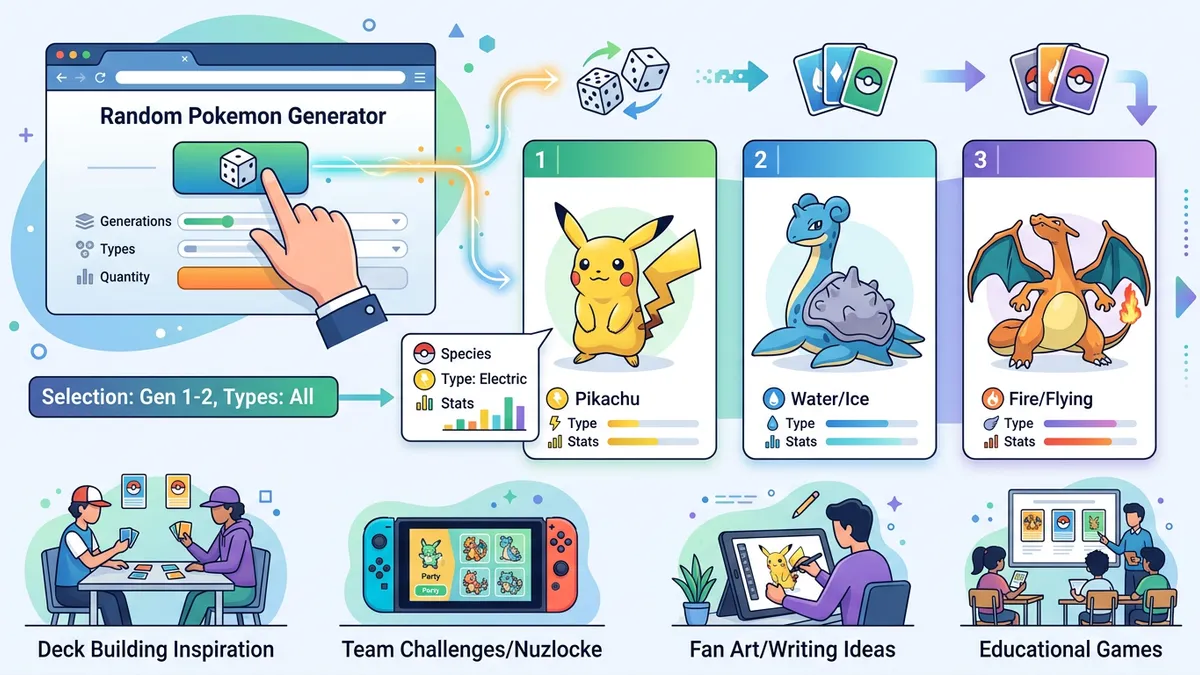
You generate a random Pokémon by clicking the Random Pokémon button, which instantly pulls a surprise pick from all 1,025 species with full stats and artwork.
Filter Your Pool First
Use the sidebar controls to narrow down your selection before generating. Pick a specific generation (Gen 1 Kanto through Gen 9 Paldea), choose a type like Fire or Dragon, or toggle legendary-only mode. The quick-select preset buttons let you lock to any single generation in one click when you generate a random Pokémon.
Multi-Generate Mode
Set the generate count to 1, 3, or 6 to pull multiple Pokémon at once. All results appear in a grid showing sprites, types, and Base Stat Totals. Click any result to expand its full card with detailed stats and type matchups.
What is Who's That Pokémon Mystery Mode?
Mystery mode transforms the generator into a silhouette guessing game inspired by the iconic anime segment that aired from 1998 to 2016.
How the Silhouette Challenge Works
When you enable Who's That Pokémon mystery mode, the generated monster appears as a pure black silhouette with its name, types, abilities, and stats completely hidden. You guess the species from its outline alone, then click the Reveal button to unmask the full card with a smooth animation.
Social and Learning Uses
Active recall exercises like identifying monsters from silhouettes improve retention rates by up to 35% compared to passive browsing. Streamers on Twitch regularly use silhouette challenges for chat engagement, with some reporting 2–3x higher participation during guessing segments.
How Does Type Effectiveness Work in Pokémon?
Type effectiveness determines which attacks deal double damage, half damage, or zero damage based on the 18 element types and their 324 individual matchup interactions.
Reading the Matchup Panel
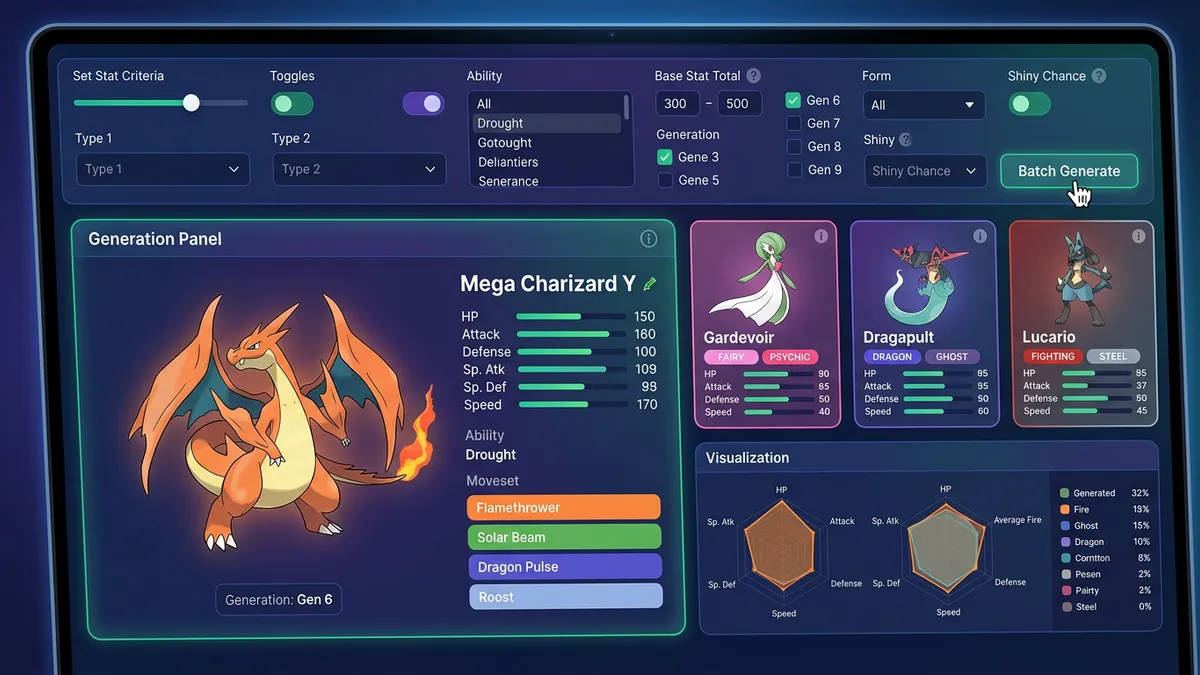
Every generated card shows three categories: types the monster is weak to (takes 2x damage), types it resists (takes 0.5x damage), and types it's immune to (takes 0x damage). Dual-type monsters create compound interactions — a Water/Ground type gains Electric immunity from Ground while keeping Water's resistance to Fire, which directly impacts type effectiveness calculations.
Team Type Coverage
Save multiple monsters to your team using the bookmark icon. The team section displays a type coverage summary showing all types represented across your squad. Top-performing competitive teams typically cover 12 to 15 of the 18 types offensively to avoid critical gaps.
Can I Use This for Nuzlocke Challenges?
You can use this generator for Nuzlocke challenges by filtering results to match your current game's regional Pokédex and toggling legendary exclusion based on your ruleset.
Generation-Locked Runs
The generation filter restricts results to a specific regional dex. Lock to Gen 1 for a Kanto run (151 species), Gen 3 for Hoenn (135 new species), or Gen 9 for Paldea (120 new species). Over 2 million active Nuzlocke players rely on randomization tools to simulate encounter tables for their challenge runs when they use this for Nuzlocke challenges.
Draft League Team Building
Multi-generate mode produces 3 or 6 options at once, making it ideal for draft-style leagues. Select from a pool of random picks rather than generating one at a time. The Base Stat Total displayed on each card helps you quickly evaluate power levels and build a balanced roster.
Step-by-Step Instructions
- 1Open the Random Pokémon Generator in your browser.
- 2Use the sidebar to set filters: pick a generation, choose a type, or toggle legendary-only mode.
- 3Enable mystery mode for a silhouette guessing game, or set the count to 3 or 6 for multi-generate.
- 4Click the Random Pokémon button to generate your selection.
- 5View the full card with artwork, base stats, type effectiveness matchups, abilities, and Pokédex entry.
- 6Click Reveal if in mystery mode to unmask the identity.
- 7Save favorites by clicking the bookmark icon to build a team with type coverage analysis.
- 8Copy the full stat sheet to share with friends.