Evaluating dynasty trades is a constant headache. How do you balance a 29-year-old superstar receiver who scores points now against a future first-round rookie pick that could become anything? One emotional decision can set your franchise back three years. This calculator takes the guesswork out of your trades by assigning market-calibrated numerical values to players and picks. Build standard or Superflex offers instantly, check the balance, and see if your trade partner is getting a fair deal.
How do you evaluate trades in a dynasty league?
Trading in a dynasty league is completely different from a standard redraft league. In redraft, you only care about projected points for the current season. In dynasty, you must weigh player age, career lifespans, team situations, and the long-term value of future rookie picks.
When you negotiate a trade, keep these three key principles in mind:

- Career Longevity: Running backs typically decline after age 26, whereas elite wide receivers and quarterbacks can maintain top-tier value deep into their late 20s and early 30s.
- Rookie Draft Picks: Future picks are highly liquid assets. Their value rises steadily as your rookie draft approaches, making them excellent tools to balance out a trade.
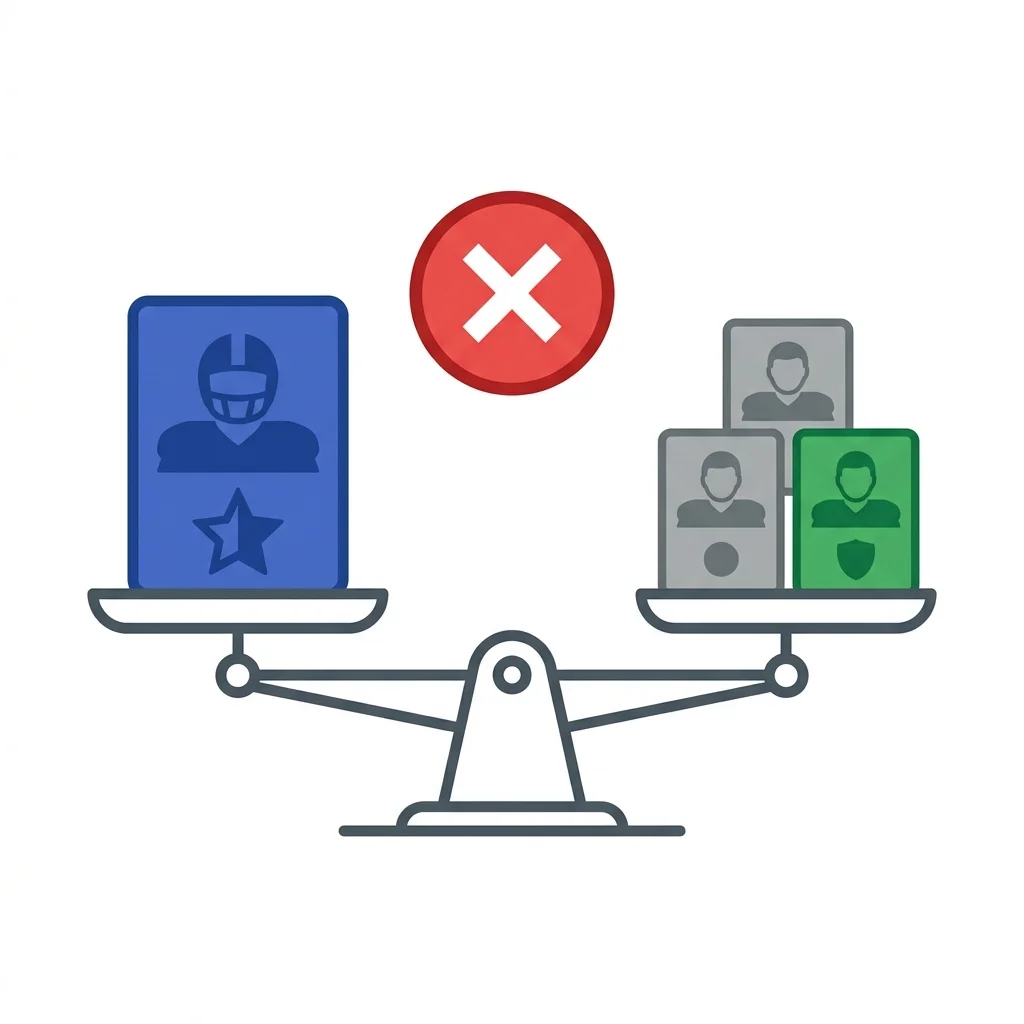
- Roster Space (The Package Tax): Trading one elite player for three average depth players is rarely a good deal. The manager receiving three players has to drop two active roster assets to make room. Our calculator applies a package tax to the side receiving more assets to adjust for this hidden cost.
What is the difference between standard and Superflex trade values?
Your league settings completely dictate player value. In standard 1-QB leagues, quarterbacks are easy to replace, so their trade value is low compared to workhorse running backs or elite receivers.
In Superflex leagues, however, managers can start a second quarterback in their flex spot. Because starting NFL quarterbacks are capped at 32, they become the most coveted assets in the game.
This chart shows how positional and draft values shift between standard and Superflex settings:
Always verify that your trade partner is looking at calculations matching your actual league settings. Evaluating a Superflex offer using a standard 1-QB calculator will lead to heavily lopsided trade requests.
| Asset Tier | Standard 1-QB Value | Superflex Value | Valuation Shift Rationale |
|---|---|---|---|
| Elite QB (Tier 1) | 4,500 pts | 9,500 pts | Quarterbacks are the highest-scoring and most stable assets in Superflex leagues. |
| Elite WR (Tier 1) | 8,000 pts | 7,800 pts | Elite receivers maintain high value but drop slightly in overall priority behind franchise QBs. |
| Early 1st Round Pick | 5,500 pts | 6,200 pts | Early picks rise in value because they offer direct access to high-value rookie QB prospects. |
| Mid 2nd Round Pick | 2,000 pts | 1,800 pts | Depth picks remain stable but experience minor dilution. |
Are there other kinds of trade calculators?
While this tool is built for fantasy football managers, people search for the phrase "trade calculator" for completely different reasons. If you are looking for other calculation types, here is a quick guide:
1. CS2/CS:GO Skin Trade Up Calculators
In gaming, players trade 10 weapon skins of a lower tier to receive a single skin of a higher tier. A trade up calculator computes the probability of getting a specific skin based on the float values of the skins you input.2. Tech & Retail Trade-in Calculators
When upgrading electronics, phones, or games, retail calculators estimate store values:- GameStop Trade-In Calculator: Estimates store credit or cash value for games, controllers, and consoles.
- Visible Trade-In Calculator: Calculates the value of older smartphones to apply as a credit toward mobile plan upgrades.
How do you negotiate and close dynasty trades successfully?
Calculators are useful guides, but making a deal requires communication. Follow these steps to build winning trades:
- Target Your Partner's Roster Context: Do not just send balanced numbers. Check your partner's team status. If they are rebuilding, offer picks and young prospects. If they are competing for a title, offer productive veterans.
- Avoid Nickeling-and-Diming: If the calculator shows a trade is 95% fair, do not stall negotiations over a late 4th-round pick. Secure the core assets.
- Account for Roster Cuts: When sending a 3-for-1 package, realize that your partner has to cut two players. Ensure your offer is valuable enough to justify making those roster drops.
Step-by-Step Instructions
- 1Select your league settings: toggling Superflex, Tight End Premium, and adjusting the team count.
- 2Under 'Team A Sends', click the buttons or dropdowns to add players by position tier or select future draft picks.
- 3Under 'Team B Sends', add the assets being returned in the trade.
- 4Review the point valuations and confirm the package adjustments are applied for multi-player packages.
- 5Check the Trade Verdict gauge to see if the trade is fair, slightly favored, or heavily lopsided.