You have a vial of freeze-dried peptide powder and a bottle of bacteriostatic water, and you need to draw a precise 250 mcg dose. How many units do you actually pull on a U-100 syringe? That is where things get tricky. A single math mistake can ruin your measurements or waste expensive research compounds. This calculator does the conversion math for you instantly—translating milligrams, milliliters, and target doses into exact syringe tick marks without any manual formulas.
What is peptide reconstitution and how does it work?
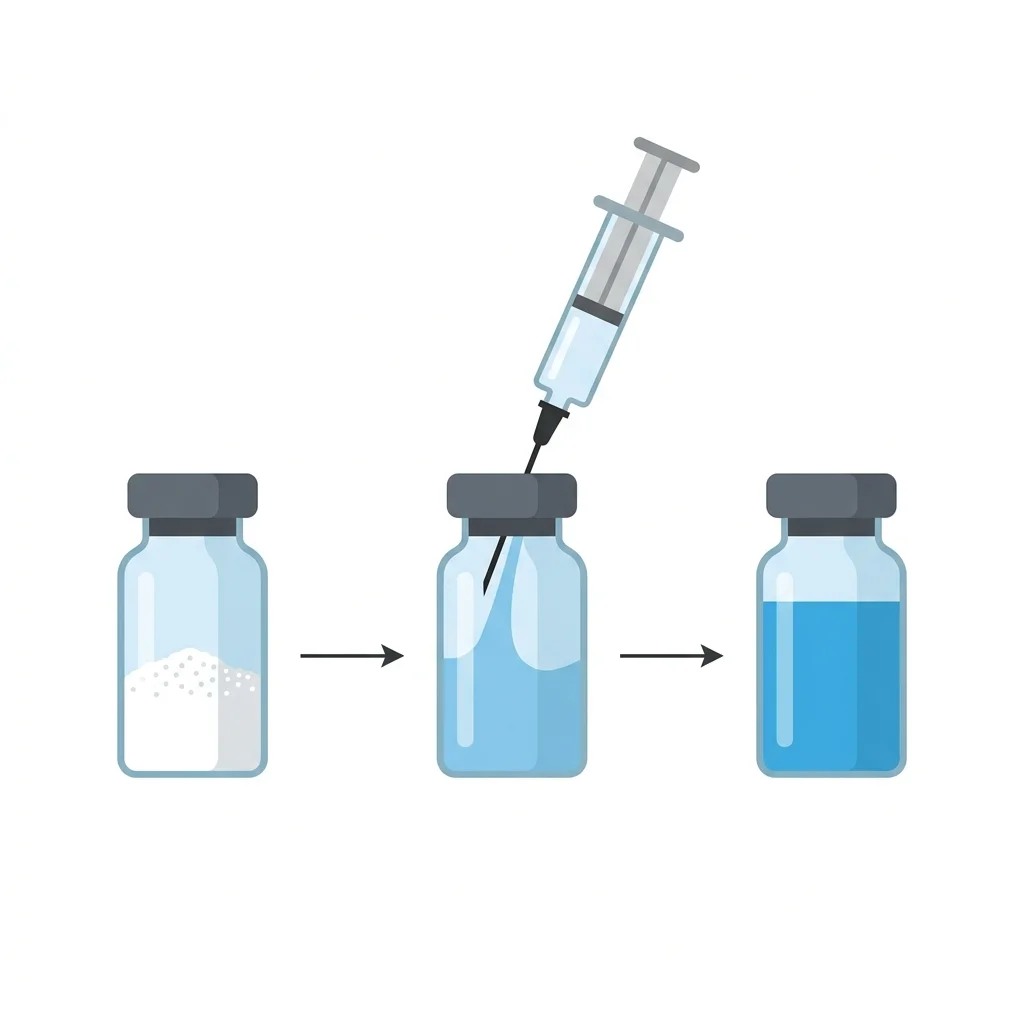
Reconstituting a peptide means dissolving its freeze-dried powder into a liquid diluent so you can measure and draw a precise dose. Since vials contain milligrams (mg) of a compound but individual doses require micrograms (mcg), you have to convert weight to volume.
To find your dosage, gather these three numbers:
- Peptide Vial Weight: The total amount of active peptide in the vial (e.g., 2 mg, 5 mg, or 10 mg).
- Diluent Volume: The amount of bacteriostatic water or sterile saline you mix into the vial, measured in milliliters (mL).
- Your Target Dose: The exact amount of active peptide you need per dose, measured in micrograms (mcg).
How do you calculate peptide reconstitution manually?
If you want to run the math manually without a calculator, you can do it in two straightforward steps.
First, find the concentration of your mixture in micrograms per milliliter:
Concentration (mcg/mL) = (Vial Size in mg * 1,000) / Water Volume in mL
Second, divide your target dose by that concentration to get the volume of liquid you need to draw:
Dose Volume (mL) = Target Dose in mcg / Concentration (mcg/mL)
To convert that volume into syringe markings, multiply it by the syringe's scale. On a standard U-100 insulin syringe (where 1 mL of liquid equals 100 units):
Syringe Units = Dose Volume (mL) * 100
Putting it all together gives you the universal formula:
Syringe Units to Draw = (Target Dose in mcg * Water Volume in mL * 100) / (Vial Size in mg * 1,000)
Which syringe size should you use for peptide dosing?
Before drawing your dose, you must match the calculator's output to the specific syringe scale in your lab. Most peptide research uses U-100 insulin syringes, which come in three common sizes:
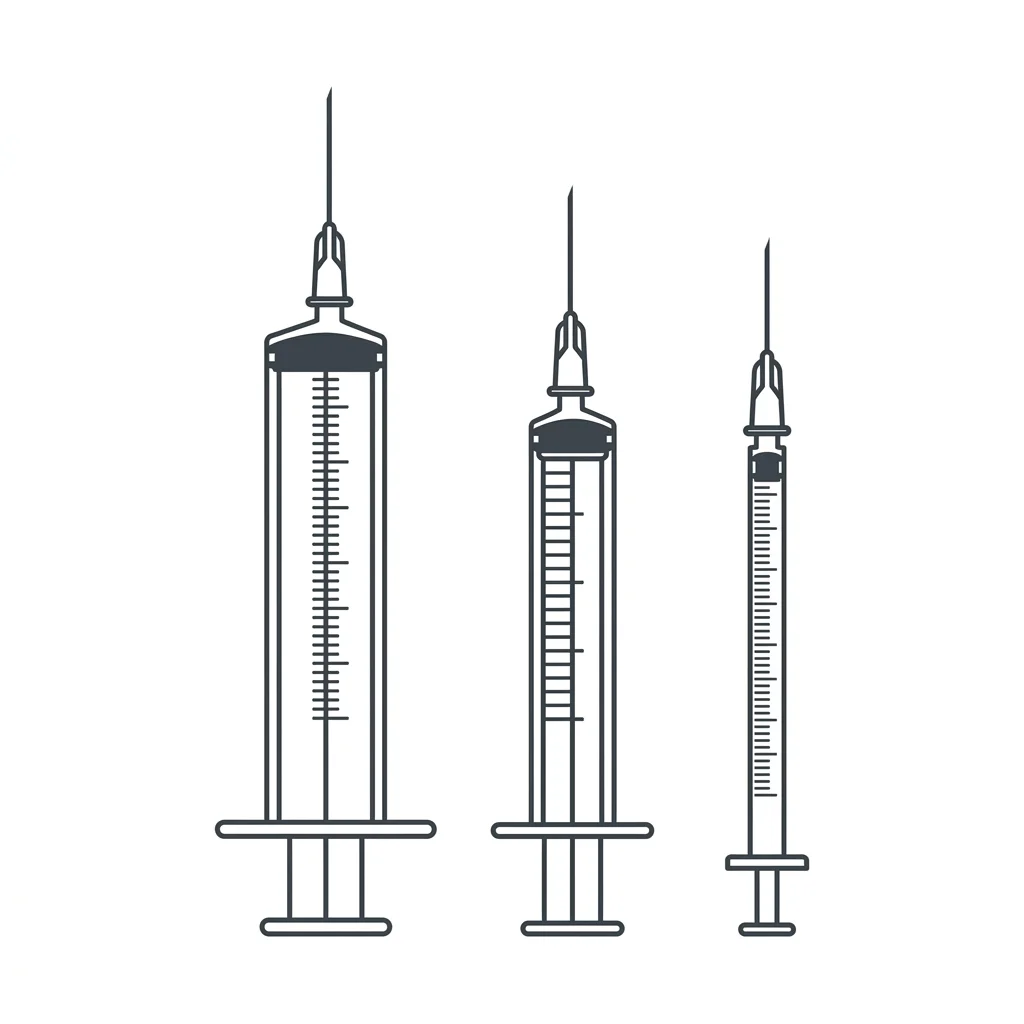
- 1.0 mL (1.0 cc) Syringe: Holds up to 100 units of volume. Typically features tick marks every 2 units (or single units on high-precision scales).
- 0.5 mL (0.5 cc) Syringe: Holds up to 50 units. Usually marked at every 1 unit.
- 0.3 mL (0.3 cc) Syringe: Holds up to 30 units. Often features half-unit marks, which are excellent for small, precise micro-doses.
Quick peptide dosage chart (5 mg vial reference)
This chart shows how different mixing volumes change the required syringe markings on a U-100 syringe for a 5 mg peptide vial:
If your calculation ends in a fraction (like 12.5 units) that is hard to eyeball on your syringe, try adding more water to the vial. Diluting the solution increases the volume you need to draw, making it easier to measure precisely.
| Vial Size (mg) | Water Added (mL) | Target Dose (mcg) | Required Volume (mL) | U-100 Syringe Units |
|---|---|---|---|---|
| 5 mg | 1.0 mL | 250 mcg | 0.05 mL | 5 Units |
| 5 mg | 2.0 mL | 250 mcg | 0.10 mL | 10 Units |
| 5 mg | 2.5 mL | 250 mcg | 0.125 mL | 12.5 Units |
| 5 mg | 2.0 mL | 500 mcg | 0.20 mL | 20 Units |
| 10 mg | 2.0 mL | 500 mcg | 0.10 mL | 10 Units |
How do you mix and store peptides safely?
To keep your active compounds stable and prevent degradation, follow these handling rules:
- Sanitize Everything: Swab the rubber stoppers on both the water and the peptide vials with alcohol before inserting a needle.
- Inject Water Slowly: Peptides are delicate. Never spray water directly onto the dry powder. Angle the needle toward the glass wall of the vial and let the water slide down the side.
- Roll, Don't Shake: Shaking creates physical shear forces that can break the fragile molecular bonds of the peptide, rendering it inactive. Roll the vial gently between your palms until the powder fully dissolves.
- Keep it Cold: Store reconstituted vials in the refrigerator (between 36°F and 46°F, or 2°C and 8°C) to keep the solution active.
Step-by-Step Instructions
- 1Input the weight of the peptide in milligrams (mg) from your vial label.
- 2Select the volume of bacteriostatic water (mL) you will add to the vial.
- 3Enter your target dose in micrograms (mcg).
- 4Choose your syringe size (e.g., U-100 with 100, 50, or 30 units) and tick mark increments.
- 5Use the visual syringe graphic to see exactly where to align the plunger to draw your calculated dose.